
How to Become a Human Resources Manager: A Complete Career Guide
Key Takeaways
Human Resources Managers blend people operations, compliance, and business goals so teams run well and risk stays low
A clear path usually includes core education, hands-on HR experience, and leadership-ready skills like coaching and decision-making
You can speed up hiring readiness with a focused plan for credentials, a specialty area (like employee relations or talent acquisition), and measurable results you can explain in interviews
You want the HR manager title, but the path feels unclear
Picture your next review: you’re already the person handling the tough conversations, cleaning up messy handoffs, and writing the follow-up notes no one else wants to own. But your title still says coordinator or generalist, and the pay band hasn’t moved, even though the work clearly has.
A common benchmark in job postings is 3–5 years of relevant experience, plus strong communication and basic compliance awareness (meaning you know the rules that affect hiring, pay, leave, and employee records and you can follow them consistently). If you’re sitting at 1–3 years, it can feel like a closed door, even when you’re already doing parts of the job.
By the end of this guide, you’ll be able to map a practical, step-by-step roadmap that covers:
Which HR manager skills to build first
What experience counts, and how to get more of it fast in your current role
Which credentials are worth your time for your target roles
A simple job-search plan you can run week to week

Understand what HR managers actually do day to day
Next, get clear on the work behind the title so you do not train for the wrong role.
Most HR managers spend their week balancing planned cycles (like hiring and performance reviews) with unplanned people issues (like conflict or attendance). A simple benchmark to use: if you cannot explain how HR work affects one measurable outcome (time-to-hire, turnover, compliance completion, engagement scores), you will sound more like support than management.
Map the core responsibilities you will be expected to own, not just “help with”:
Employee relations: handle conflicts, investigations, policy interpretation, and manager coaching
Hiring: job intake meetings, interview process design, offer coordination, and onboarding handoffs
Performance: run review cycles, support performance improvement plans, and train managers on tough conversations
Training and development: identify gaps, track completion, and measure whether training changes behavior
Policies and compliance: write updates, roll out changes, and document decisions consistently
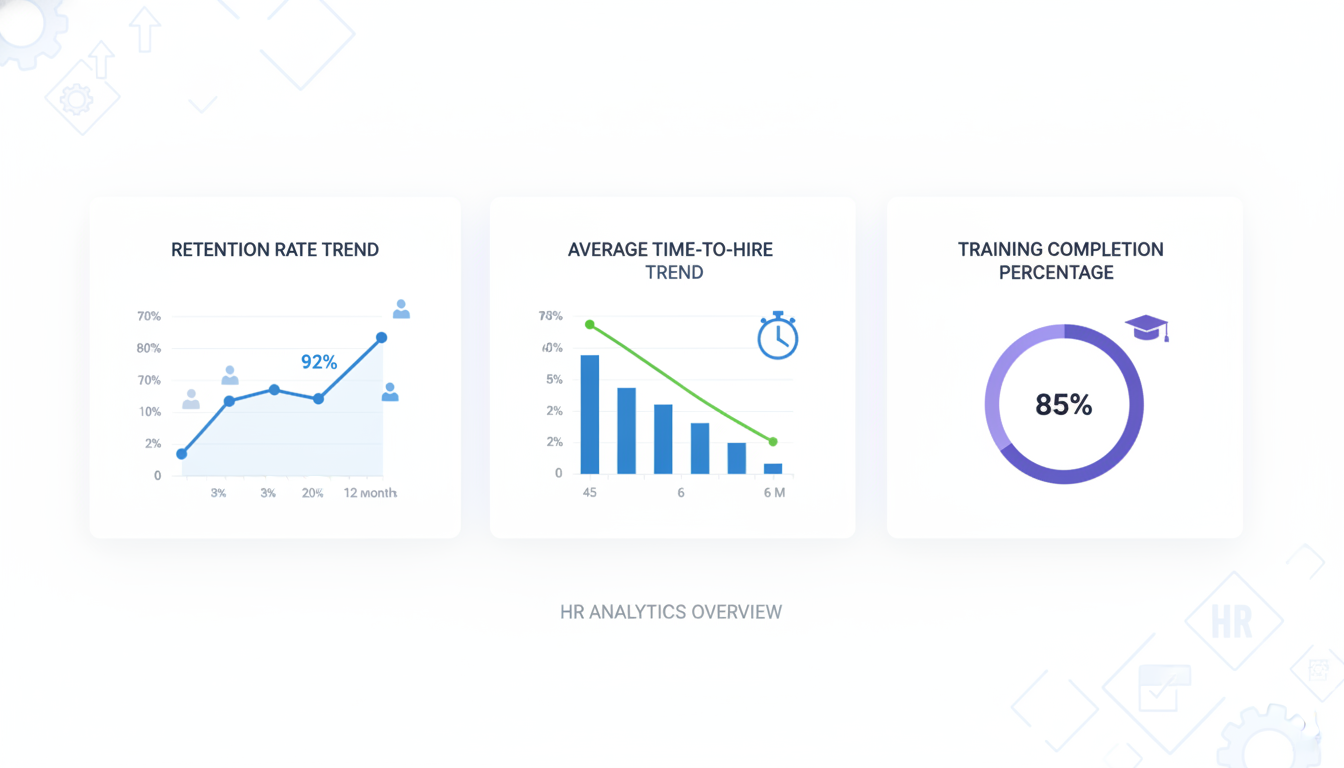
HR metrics: report on headcount, attrition, time-to-fill, absenteeism, and training completion
If you do one thing, do this: pick 2 metrics you can influence in your current role and start tracking them weekly for 8 to 12 weeks.
Here’s why role titles matter when you apply. An HR “manager” in a 60-person company may be a one-person HR team, while an HR manager in a 2,000-person company might manage a team and focus on one slice of HR.
HR generalist: broad execution across many areas, often with little ownership of long-term planning
HR business partner (HRBP): works directly with leaders on workforce plans, performance trends, and org changes
HR manager: owns an HR area or the full HR function, sets priorities, and is accountable for outcomes
Here’s the catch: this approach works best when the job posting is specific about scope (team size, metrics, compliance needs). It fails when postings are vague, so you must confirm in the first recruiter call what you will own in the first 90 days.
Build the right education and credentials without wasting time
Next, treat education like a hiring filter, not a life project. Your goal is to pick the smallest set of learning steps that gets you past screening and makes you credible in interviews, without adding years to the timeline.
For many candidates, there are three common paths, and each has a tradeoff:
Degree route: Works best if you need a baseline credential for your market or want long-term mobility, but it can be slow and expensive
Short certificate courses: Works best when you already have work experience and need proof of current HR knowledge, but it can look thin if you cannot explain what you applied at work
Targeted HR specializations (like employee relations, compensation, or talent acquisition): Works best when you are aiming for a specific type of HR manager role, but it can fail if the job expects a generalist who can cover more areas
So, prioritize what hiring managers often screen for first, then fill in gaps. If you do one thing, do this: build a clear base in the topics that show up in job descriptions and interview questions.
Start with these knowledge areas and tie each one to a work example you can talk through in 60 to 90 seconds:
Labor basics: Know core terms, protected issues, and what to escalate to legal or senior HR
Policy writing: Practice turning a messy situation into a short, clear policy plus a one-page manager guide
Conflict resolution: Be able to explain how you handle a complaint, run a fair conversation, and document outcomes
HRIS (HR information system): Know how employee data flows from hire to exit, and how to pull simple reports managers use
Common mistake: collecting random certificates. Fix it by choosing 1 to 2 credentials that match the roles you want, then using your learning plan to produce a small portfolio of outputs, like a draft policy, a sample investigation checklist, and one HRIS-style report outline.
That said, you can make real progress in 90 days even with a full-time job if you keep the plan tight. Aim for 4 to 6 hours per week, split into short sessions you can repeat.
A simple 90-day plan:
Days 1 to 30 (foundation): 3 hours learning + 1 hour writing notes you can reuse in interviews
Days 31 to 60 (application): 2 hours learning + 2 hours building artifacts (policy draft, conflict script, checklist)
Days 61 to 90 (proof): 2 hours learning + 2 hours practicing stories using the STAR format (situation, task, action, result) and updating your resume bullets
If you are short on time, skip extra electives and focus on policy writing plus conflict resolution first. Those two areas show up in everyday manager work and they are easier to prove with a before-and-after example.
Get qualifying experience and prove impact before you apply
Next, stop waiting for a perfect HR job title to appear. You can create qualifying experience where you are by taking on HR-adjacent work that supports people systems, documentation, and repeatable processes.
Start by turning your current role into experience that hiring managers recognize:
Volunteer to help with onboarding checklists for new hires in your team
Coordinate training sessions, calendars, attendance, and follow-ups
Document a policy or process in plain language (time off requests, shift swaps, expense rules)
Help managers keep interview notes consistent and organized
Track recurring employee questions and propose a simple FAQ or guide
Also, prove impact with outcomes, not responsibilities. If you do one thing, keep a one-page log of what changed because you were involved, with a baseline and a new result.
Examples of outcomes you can capture in 4 to 8 weeks:
Reduce time-to-hire by removing a step, tightening scheduling, or standardizing templates
Improve retention in the first 90 days by fixing onboarding gaps and clarifying role expectations
Increase training completion by setting reminders, simplifying access, and tracking completion weekly
Lift engagement in a small team by running a short pulse check and acting on one theme
Here’s the catch: results only count if you can explain your role. Write down what you did, what tool you used (even a spreadsheet), and how you measured the change.
That said, hiring teams often assume HR managers can work inside tools and handle sensitive information from day one. If you are short on time, focus on the basics of how work moves from request to record, and practice writing clear documentation.
Make sure you can speak to:
ATS basics (the system used to track candidates): stages, interview scheduling, and notes standards
HRIS basics (the system used to store employee data): profiles, job changes, and reporting fields
Documentation standards: consistent naming, version control, and where files live
Confidentiality: who should see what, how to avoid oversharing, and how to store files safely
Common mistake: listing tools you have “used” when you only watched someone else. Fix it by requesting a small, supervised task, like updating a training tracker or drafting an onboarding template, so you can describe real workflow steps.
Master the skills that separate managers from coordinators
Next, focus on the skills that change how leaders experience you: not as someone who completes tasks, but as someone who owns outcomes. Coordinators keep work moving and follow direction; managers coach people, make calls when tradeoffs are real, and handle conflict without creating more risk.
If you do one thing, practice leadership conversations weekly. Block 30 minutes to role-play a coaching talk, a performance warning, or a disagreement with a department head, then write down the decision you would make and why. This works best in a growing team where priorities shift fast; it fails when you avoid decisions and only pass information along.
So build manager-level leadership range in four areas:
Coaching: set clear expectations, give specific feedback, and agree on a 2 to 4 week check-in plan
Difficult conversations: prepare a one-page outline with facts, impact, and the ask before you meet
Stakeholder management: align early with finance, legal, and operations so your HR work is not a surprise later
Decision-making: name the options, pick one, and document what would change your mind
A common mistake is treating stakeholder updates like status reporting. Fix it by leading with a recommendation, the risk, and the timeline, then inviting questions.
That said, managers are also judged on judgment and consistency, especially around compliance and risk. You do not need to be a lawyer, but you do need a repeatable way to investigate, document, and apply policy the same way across teams.
Use a simple risk checklist before you act:
What is the allegation or issue in one sentence
What facts do we have, and what is missing
Who needs to be interviewed, and in what order
What documents should be saved (messages, time records, prior warnings)
What policy applies, and what past cases were similar
If you’re short on time, skip perfect formatting and do two things: write a dated summary of facts and decisions, and store it in the right place so it can be found later.
In practice, strategic HR is what makes you sound like a manager in meetings. Start connecting people work to business numbers in small, concrete ways, even if you are not the one setting the budget.
Pick one area to practice for 60 days:
Workforce planning: forecast headcount needs for the next quarter by team, role, and start date assumptions
Compensation basics: learn salary ranges, how offers are approved, and what triggers an exception
Aligning to KPIs: tie one initiative to a metric, like reducing time-to-fill by 10 to 15% or lowering first-90-day turnover
Here’s the catch: strategic talk without follow-through reads as fluff. Bring a short plan to each discussion: the metric, the owner, the first step you can complete in the next 7 days, and what support you need.
Land the role with a focused job search and interview plan
Next, switch from “I’m qualified” to “I’m the obvious choice for this exact HR manager role.” Most hiring teams scan for four signals fast: scope (how big the org was), measurable outcomes, complexity (multiple employee groups, tricky cases, fast change), and leadership (how you influence without waiting for permission).
Start by tailoring your resume to what HR managers are hired to own. Keep your bullets anchored in numbers, time, and decisions, not tasks.
Swap task bullets for outcome bullets: “Reduced time-to-hire from 52 to 38 days over two quarters”
Show scope: “Supported 220 employees across 3 locations”
Prove complexity: “Handled 12 employee relations cases including investigations and terminations”
Add leadership signals: “Coached 8 managers on documentation and performance plans”
If you do one thing, mirror the job post language for top priorities like employee relations, compliance, and manager support
So your interview prep should sound like a manager, not a helper. Expect questions that test your judgment under pressure and your ability to prioritize when everything feels urgent.
Prepare 6 to 8 stories you can retell in 2 minutes each using a simple structure: situation, what you reviewed, your decision, and the result. Focus on these common areas:
Conflict scenarios: how you de-escalate, document, and advise managers
Investigation approach: what you ask, what you write down, and how you keep things consistent
Policy decisions: when you apply policy as-is vs when you recommend an update
Prioritization: how you handle three urgent issues at once (for example: a harassment complaint, a payroll error affecting 40 employees, and a manager requesting a termination)
Here’s the catch: many candidates over-share sensitive details. Instead, anonymize people and keep the story on process and judgment (what you verified, what you escalated, what you decided).
That said, negotiation gets easier when you treat it like alignment, not a standoff. You are confirming pay, scope, and the support you need to succeed, because unclear expectations create quick burnout.
Go in with a pay range you would accept (not a single number) and a short list of scope questions. If you’re short on time, skip long scripts and bring these topics:
Pay benchmark: the range you expect based on location and scope
Role scope: what “success in 90 days” looks like and what problems they want solved first
Team size: whether you manage people now or later, and how much HR admin work you will still own
HR systems: what tools they use for HRIS, payroll, recruiting, and reporting, and what is changing soon
Decision rights: what you can decide vs what requires approval
Common mistake: negotiating only on salary. Fix it by clarifying workload drivers (employee count, new locations, open roles, investigations volume) so you can negotiate title, support, or priorities when pay is tight.
Closing remarks
Next, remember this as you map your next step: “The best HR leaders earn trust through clarity, consistency, and care.” Clarity is what you communicate and document, consistency is how you follow through week to week, and care is how you handle people-first decisions when pressure is high.
So before you chase another credential or send another round of applications, pause and diagnose the real bottleneck. Is it skills (you can do HR tasks but not lead), experience (you have effort but not measurable results), or confidence (you are ready but you do not show it on paper or in interviews)? Pick one and set a simple plan for this week:
If it is skills: lead one meeting, write one policy draft, or build one basic HR dashboard in 60 minutes
If it is experience: quantify one project result and ask your manager for one stretch assignment tied to hiring, employee relations, or HR operations
If it is confidence: rewrite your resume with 3 impact bullets and practice 5 interview stories out loud
Train for the HR manager path with AION Academy
FAQ
Do I need a degree to become an HR manager?
How many years does it take to become an HR manager?
What entry-level jobs help you move into HR management?
Which skills matter most for HR manager interviews?
How can I get HR experience if my current role isn’t in HR?
Director Development
Courses
-
Boardroom Excellence
-
Corporate Accountability
-
Financial Acumen
-
Digital Transformation
-
Director’s Toolkit
-
Global Business Strategies
-
Legal Insights for Directors
-
Managing Crisis
-
Mergers and Acquisitions
-
Risk Management Strategies
-
Stakeholder Engagement
-
Sustainability and ESG
-
The Modern Director
Executive Education
Categories
-
Advanced People and Culture
-
Corporate Governance Ethics
-
Customer-Centric Strategies
-
Digital Transformation
-
Financial Acumen for Leaders
-
Global Business Strategy
-
Innovation and Change
-
Sales and Marketing
-
Strategic Leadership and Vision
-
Sustainability and CSR
Executive Education
Courses
-
Accountability Transparency
-
Advanced CRM and AI
-
Advanced Financial Strategy
-
Advanced Strategic Planning
-
Blockchain and Emerging Tech
-
Boardroom Dynamics
-
Brand Leadership
-
Building Data-Driven Sales
-
Building Executive Resilience
-
Corporate Gov Excellence
-
Corporate Social Responsibility
-
Cross-Border Mergers
-
Cybersecurity Strategy
-
Data-Driven Decision Making
-
Design Thinking for Executives
-
Developing Global Expansion
-
Driving Growth
-
Driving Service Excellence
Executive Education
Courses
-
Advanced Communication
-
Business Continuity
-
Diversity and Inclusion
-
Service Excellence
-
Data-Driven Decisions
-
Corporate Social Responsibility
-
Planning and Budgeting
-
Design Thinking
-
Product Development
-
Visionary Leadership
-
Corporate Governance
-
Process
-
Performance
-
Risk
-
Sales Strategy
-
Environmental Impact
-
Emerging Technologies
-
Work Life Balance
-
View More
Management
Categories
-
Communication
-
Crisis and Risk
-
Cultural Competency
-
Customer-Centric
-
Digital Transformation
-
Ethical and Sustainable
-
Financial
-
Innovation Change
-
Innovation Entrepreneurship
-
Leadership and Strategic
-
Legal and Compliance
-
Operational
-
People
-
Project
-
Sales and Marketing
-
Sustainability and Enviro
-
Technology and Cybersecurity
-
Time and Stress
Management Courses
-
Coming Soon
Diploma Courses
-
Coming Soon
Industry Qualification Categories
-
Coming Soon
Industry Qualification Courses
-
Coming Soon
Trade & Vocational
Categories
-
Business & Finance
-
Creative Arts & Design
-
Education & Training
-
Environ & Agri Tech
-
Fashion & Textile
-
Healthcare & Medical
-
Hospitality & Service
-
Law & Security
-
Manufacturing & Engineering
-
Miscellaneous
-
Personal Dev & Wellness
-
Technology and IT
-
Trades and Construction
-
Transport & Logistics
Trade & Vocational
Courses
-
3D Game Development
-
3D Modeling and Animation
-
3D Printing and Additive
-
Aerospace Technician
-
Air Conditioning Repair
-
Aircraft Avionics Systems
-
Aircraft Maintenance
-
App Development
-
Apparel Manufacturing
-
Auto Body Repair
-
Automated Systems Technician
-
Automotive Repair
-
Baking and Pastry Arts
-
Barista and Coffee Brewing
-
Bicycle Repair
-
Biomedical Equipment
-
Biotechnology Laboratory
-
Blockchain Development
Trade & Vocational Courses
-
Broadcasting and Journalism
-
Building Maintenance
-
Business Intelligence and Data
-
Business Process Outsourcing
-
Computer Numerical Control
-
Carpentry and Woodworking
-
Child Care and Early Education
-
Cloud Computing
-
Commercial Driver’s License
-
Commercial Photography
-
Commercial Refrigeration
-
Computer Programming
-
Construction Project
-
Corporate Training
-
Cosmetology and Skincare
-
Culinary Arts and Cuisine
-
Cybersecurity Fundamentals
-
Cybersecurity Risk
-
Cybersecurity Law Enforce
Trade & Vocational Courses
-
Data Analysis Visualization
-
Data Science Machine Learning
-
Database Administration
-
Dental Assistant and Hygiene
-
Digital Forensics
-
Digital Illustration Concept Art
-
Digital Marketing SEO
-
Digital Photography Editing
-
Drone Maintenance
-
E-commerce Development
-
Educational Technology
-
Elderly Care Geriatric
-
Electrical Installation
-
Electrocardiogram Technician
-
Electronics Repair
-
Emergency Medical Technician
-
Environmental Health Safety
-
Event Planning
-
Event Videography
Trade & Vocational Courses
-
Fashion Design Tailoring
-
Fashion Merchandising
-
Film Production
-
Fire Safety Prevention
-
Firefighting Response
-
Fitness Trainer Coaching
-
Food Safety Sanitation
-
Forklift Operation
-
Furniture Restoration
-
Game Design (UX)
-
Geographic Info Systems
-
Graphic Design Com
-
HVAC Technician
-
Heavy Equipment
-
Home Inspection Codes
-
Hospitality Service
-
Hotel Front Desk
-
Human Resources Dev
-
Human Resources Manage
Trade & Vocational
Courses
-
IT Network Security
-
IT Support Technician
-
Industrial Technician
-
Industrial Machine Operations
-
Interior Design Planning
-
Interior Lighting Design
-
Landscape Architecture Design
-
Landscape Irrigation Systems
-
Law Enforce Criminal Justice
-
Leadership Skills Training
-
Luxury Goods Sales Marketing
-
Machine Learning for Business
-
Marine Biology Technician
-
Masonry and Concrete Work
-
Massage Therapy Bodywork
-
Medical Laboratory Technician
-
Mobile App Development
-
Music Production Composition
-
Network Cable Installation
-
Nursing Assistant Training
-
Painting Decorating
Trade & Vocational Courses
-
Personal Assistant Support
-
Personal Development
-
Personal Financial Planning
-
Pharmacy Technician
-
Physical Therapy Assistant
-
Piping and Pipeline Systems
-
Plastering Drywall Installation
-
Plumbing Systems
-
Precision Agriculture Farming
-
Precision Machining
-
Project Estimating and Costing
-
Property Management
-
Public Health and Wellness
-
Public Relations Com
-
Public Safety Management
-
Quality Assurance Control
-
Renewable Energy Systems
-
Risk Management Compliance
-
Robotics Welding
-
Robotics Automation Systems
-
Roofing Waterproofing
Trade & Vocational Courses
-
Sculpture Fine Art Techniques
-
Security Systems Installation
-
Sewing Garment Construction
-
Smart Automation Systems
-
Smart Grid Renewable Energy
-
Smart Home Technology
-
Social Media Management
-
Solar Panel Installation
-
Sound Engineering Mixing
-
Sports Coaching
-
Sports and Fitness Nutrition
-
Structural Engineering Drafting
-
Supply Chain Logistics
-
Sustainable Construction
-
Tattoo Art and Body Piercing
-
Technical Writing Documents
-
Telecommunications Networking
-
Textile and Fabric Technology
-
Travel Agency Operations
-
Travel Tourism Management
-
Urban Farming Aquaponics
Trade & Vocational
Categories
-
Business & Finance
-
Creative Arts & Design
-
Education & Training
-
Environ & Agri Tech
-
Fashion & Textile
-
Healthcare & Medical
-
Hospitality & Service
-
Law & Security
-
Manufacturing & Engineering
-
Miscellaneous
-
Personal Dev & Wellness
-
Technology and IT
-
Trades and Construction
-
Transport & Logistics
Career Pathways
-
Accountant
-
Computer Programmer
-
Data Scientist
-
Teacher
-
Engineer
-
HSE Officer
-
Hotel Manager
-
Human Resource Manager
-
Info Tech Manager
-
Lawyer
-
Executive Officer
-
Marketing Manager
-
Nurse
Career Pathways
-
Coming Soon
Career Pathways
-
Coming Soon
Career Levels
-
Director Development
-
Executive Education
-
Management
-
Diploma
-
Industry Qualifications
-
Trade & Vocational
-
Career Pathways
-
Soft Skills
-
Free Online Courses
Course Disciplines
-
Accounting & Finance
-
Agriculture & Environment
-
Aviation & Transportation
-
Communication & PR
-
Computer Science
-
Creative Arts & Media
-
Data Science
-
Education & Teaching
-
Emerging Technology
-
Engineering
-
Health Safety & Environment
-
Health & Wellness
-
Hospitality
-
Human Resources
-
Information Technology
-
Languages
-
Legal & Regulatory
-
Marketing & Sales
-
Medical
-
Performing Arts & Theatre
-
Security
-
Social Sciences
-
Sports
Soft Skills
-
Business Management
-
Coding and Software
-
Creative Design Pro
-
Digital Marketing
-
Entrepreneurship and Start-up
-
Financial Management
-
Hotel Management
-
IT and Cybersecurity
-
Microsoft Office
-
Project Management
-
Soft Skills
Partners
-
Learning Centres
-
Academic Partners
-
Corporate Partners
-
NGO Partners
-
Professional Associations
-
AION for Business
Regions
-
Africa
-
Asia
-
Caribbean
-
Central America
-
Europe
-
Middle East
-
North America
-
Oceania
-
South America
Our Vision is to Deliver Global Affordable Quality Education and to Solve the United Nations Sustainable Development Goal #4
Our Mission is to Empower Individuals with the Skills they need to Follow any Career Path they seek.
Our Strategy entails a Flexible Education Model, Practical Skills & Global Qualifications, Our Students are Positioned for Jobs, Entrepreneurship, Career Changes & Competence in the Real World.
AION Academy
-
Home
-
About
-
Blog
-
News
-
Work With Us
-
Affiliate Programme
-
Full Course List
Connect
-
Contact Us
-
Sign In
-
Sign Up
-
Reset Password
-
Idea Hub
-
Create Your Course
-
Merchandise Store
-
Media Kit
-
Web Links
Legal
-
Terms of Service
-
Privacy Policy
-
Cookie Policy
-
Honour Code
-
Accessibility Policy
-
Trademark Policy
-
Modern Slavery Statement
-
Your Privacy Choices
-
Sitemap